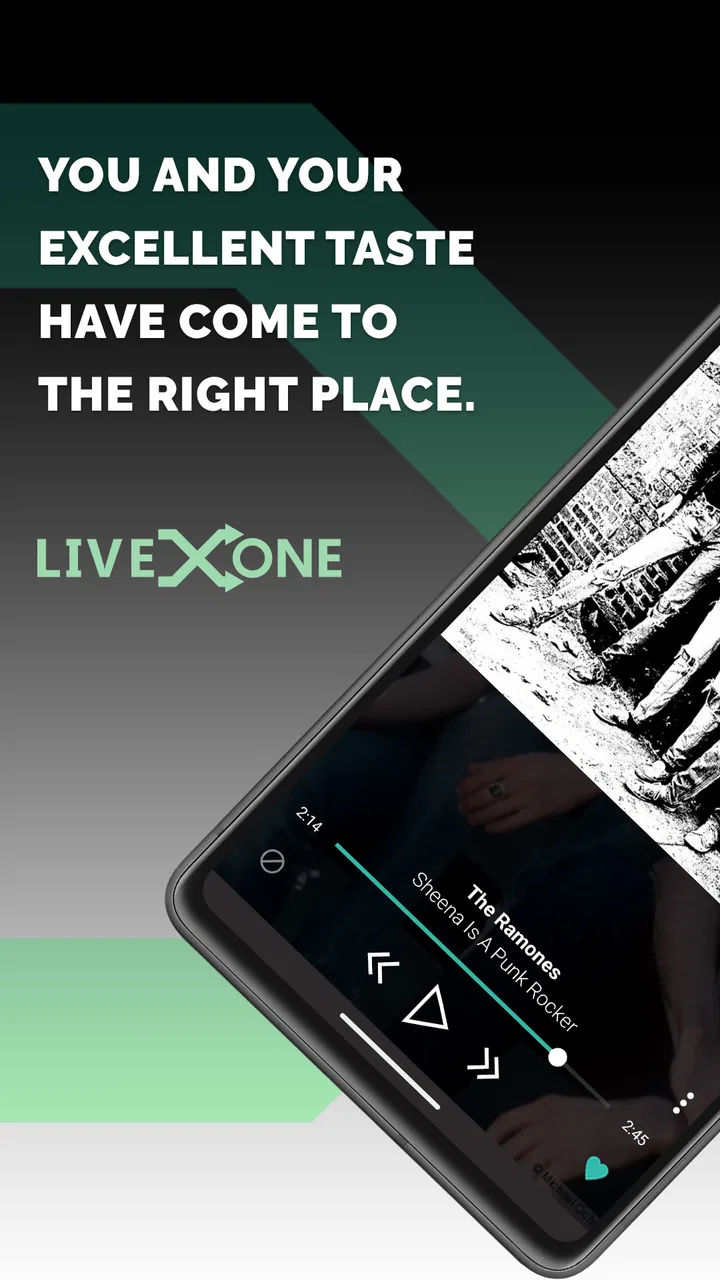
LiveOne: Stream Music & More
- 4.5
- Rating
- 100.00M
- Installs
- Free
- Price

 Analysis by App-foxy
LiveOne: Stream Music & More is the kind of audio app I would suggest to someone who wants music and spoken content in the same place, rather than maintaining separate apps for every listening habit. I used it as a general-purpose companion: something to open when I wanted background music, a podcast during a routine task, or a quick way to move between different kinds of audio without starting from scratch.
What makes the decision interesting is that LiveOne sits between several familiar categories. It is not simply a personal music library, and it is not only a podcast player. It is a broad music and audio app from Slacker Inc. that tries to make discovery and everyday listening feel connected. That approach works well for some people, especially listeners who enjoy variety. It is less convincing for anyone who already has a carefully organized collection and expects absolute control over every part of playback.
How I judged whether LiveOne was worth keeping
When I review an app like this, I do not judge it only by how quickly a song starts. I look at the whole listening routine: how easy it is to find something suitable, whether music and podcasts feel comfortable together, how much attention the app demands, and whether the free experience is useful before spending money. I also ask a practical question: would I still open it on an ordinary day when I am not deliberately testing it?
You May Also Like

 Pandora - Music & Podcasts
Pandora’s Music Is Easy to Start, but Harder to Recover
Pandora’s strength is its low-effort path from a seed to a station. Its weak spot is how much confidence it asks you to place in connection, setup, and quiet recovery.

 AccuWeather: Weather Radar
AccuWeather Review: A Quick, Clear Forecast for Everyday Decisions
For everyday plans, the best forecast is the one you can understand quickly. AccuWeather makes rain timing, radar, and local conditions easy to act on, with a few trade-offs.

 Hill Climb Racing
Why Hill Climb Racing Still Turns Crashes Into One More Run
A tiny car, a bumpy hill and one more upgrade: Hill Climb Racing keeps resurfacing because its simple chaos makes every near-miss feel personal.

 AliExpress - Shopping App
AliExpress Makes Global Shopping Feel Personal, but Shoppers Bear the Risk
AliExpress turns a global marketplace into a pocket-sized discovery engine. Its reach is useful, its shopping loop compelling, and its trade-offs easy to miss.

 Lords Mobile: Kingdom Wars
Lords Mobile Is a Kingdom-Building Routine, Not a Quick Match
A case-by-case verdict on the building, battles, device demands, and social commitments that make Lords Mobile rewarding for some players and exhausting for others.

 PDF Scanner app - TapScanner
TapScanner Makes Paperwork Easier to Capture, Check, and Share
TapScanner makes scanning with a phone feel less like a rescue operation and more like a dependable step in getting work done. Its capture tools are useful, though not flawless.
More From Our News Desk
View All News


LiveOne passed that everyday test because its appeal is based on convenience rather than a single specialist feature. I could treat it as an audio starting point instead of deciding first whether I wanted a radio-style session, a podcast, or another form of listening. That reduces the small amount of mental effort involved in choosing what to play, which matters when I am cooking, commuting, tidying, or settling into work.
The app is free to download, with optional purchases ranging from a few dollars to several dozen dollars per item. That makes the first decision simple: install it and see whether its style suits you before committing financially. I would still pay attention to what any purchase changes for my own use, because a free entry point is valuable only if the unpaid experience remains comfortable enough to evaluate.
Its Teen content rating is also worth keeping in mind. I would not hand the app to a younger child without checking what they can access and how independently they can browse. For teenagers and adults, the rating is a useful reminder that a broad audio catalog can include material that is not designed for children, even when the app is being used casually in a family setting.
The first decision: discovery or control?
The most important choice is whether you prefer being guided or being precise. LiveOne makes more sense when I want to choose a mood, a familiar direction, or a type of program and then let the listening experience carry me forward. It is not my first choice when I want to build a meticulously ordered queue from a personal collection and manage every transition myself.
This distinction separates LiveOne from a traditional local music player. A local player is excellent when the files are already on the device and the listener knows exactly what should play next. LiveOne is more useful when the problem is not “how do I play this file?” but “what should I listen to now?” That is a small difference in wording, but a major difference in daily behavior.
It also differs from a podcast-only application. A dedicated podcast tool usually makes subscriptions, episode history, and long-form organization the center of the experience. LiveOne is more appealing to someone who may listen to a podcast in the morning and music later without wanting two separate destinations to feel like completely different routines.
Where LiveOne feels strongest
Its biggest strength is the combination of music and podcasts under one roof. I found that especially useful during fragmented days. In the morning, I might want spoken content while getting ready; later, I might prefer music while working; in the evening, I might switch again without changing the general app I use. That continuity is more valuable than it sounds because it removes repeated searches through several services.
LiveOne also suits listeners who do not want to spend every session curating. There is a difference between enjoying music and wanting to act as your own programmer. When I am driving or doing household work, I often prefer a direction rather than a detailed plan. An app that helps me begin listening quickly can be more useful than one with endless organizational tools that I rarely touch.
Another advantage is its broad identity. The app does not force me to think of music and podcasts as unrelated activities. That makes it a sensible option for people whose listening habits change throughout the day. If your idea of a good audio service includes both familiar songs and spoken programs, LiveOne has a clear reason to exist beyond simply duplicating a music player.
Its popularity supports that general appeal: the app holds an average rating of 4.5 from roughly 355 thousand ratings and has passed 100 million installs. Those figures do not prove that it will match every listener, but they do suggest that the combined approach works for a large audience rather than being a niche experiment.
A realistic day with the app
Imagine a weekday when I have a short breakfast, a commute, and a long block of routine work. I could begin with a podcast because I want something conversational, then move to music when I need fewer words competing with my thoughts. During the commute home, I might return to spoken content. With LiveOne, the useful part is not merely having both options; it is being able to keep the same audio habit instead of treating each change as a new technical task.
That workflow is particularly helpful for people who listen in short bursts. A specialist music service may be better for a carefully planned listening session, while a podcast manager may be better for tracking a long series. LiveOne is strongest in the middle: quick transitions, broad discovery, and enough variety to support a day that does not follow one audio format.
Small habits that make the experience better
I recommend deciding what kind of session you want before browsing deeply. If I open an audio app without a purpose, I can spend more time evaluating choices than listening. With LiveOne, I get better results when I begin with a simple intention such as “music for concentration” or “something spoken for the commute.” This keeps discovery helpful instead of turning it into endless scrolling.
I also treat music and podcasts differently. Music can work well as a flexible background layer, while podcasts usually deserve more attention and a more deliberate starting point. Switching between them is convenient, but I would not assume that one listening mode should be organized in exactly the same way as the other. Keeping that distinction in mind makes the combined catalog feel less cluttered.
A third useful habit is to test the free experience during several types of day before considering an in-app purchase. A service can feel excellent during a relaxed evening and less suitable during a commute or work session. I would try it in the situations that matter most to me, then decide whether any paid option solves a real irritation rather than paying simply because I like the general concept.
Where the app may create friction
The same breadth that makes LiveOne convenient can make it feel less focused. When music and podcasts share the same destination, I sometimes have to be more intentional about what I am looking for. Someone who wants a highly specialized podcast workflow may find a dedicated podcast app clearer. Someone who wants an advanced personal music library may prefer a service built around albums, playlists, and exact queue control.
There is also a trade-off between discovery and predictability. A guided listening experience can save time, but it may not satisfy me when I have a very specific sequence in mind. If I already know the exact album or playlist I want, a more direct music service may feel faster. LiveOne earns its place when I am open to being led, not when I am trying to reproduce a carefully scripted session.
The free model deserves a realistic look as well. Being free makes the app easy to try, but optional purchases mean that the experience may not be identical to a fully paid alternative. I would avoid comparing the price alone and instead ask whether the free version supports my normal routine. If it does, the app has already demonstrated value; if it repeatedly interrupts the way I listen, the low entry cost will not make the friction disappear.
Who should choose a different category?
I would point a serious podcast listener toward a dedicated podcast app when episode management is the main priority. That is especially true for someone following many ongoing shows, organizing listening carefully, or wanting a workflow centered almost entirely on episodes. LiveOne can still be useful for occasional podcasts, but it is not automatically the best specialist tool just because podcasts are included.
I would also suggest a more focused music service to listeners who care deeply about exact catalog control, detailed personal organization, or a carefully constructed queue. LiveOne is better for flexible listening than for treating the app like a private record shelf. If the joy comes from arranging every album and transition yourself, its broad, guided nature may feel like a compromise.
On the other hand, people who dislike maintaining several audio apps should take a close look at LiveOne. It is a particularly sensible candidate for casual listeners, commuters, students, and households where one person wants music while another regularly listens to spoken content. The app becomes more attractive as the number of separate listening needs increases.
What switching really costs
Moving to LiveOne is easy at the installation level because the app is free, but the more meaningful cost is habit change. If I already have years of carefully arranged playlists or a well-established podcast routine elsewhere, I should not expect a new all-in-one app to recreate that feeling immediately. The first phase is better treated as a trial of a different listening style, not as a perfect replacement for every existing tool.
I would begin with one repeatable use case rather than moving my entire audio life at once. For example, I might use LiveOne only during commutes for a week, then decide whether its combination of music and podcasts actually reduces effort. This approach makes the comparison fair. It also prevents me from abandoning a specialized service before I know whether LiveOne can handle the task I care about most.
There is a second kind of switching cost: attention. Discovery is helpful when I want suggestions, but it can become a distraction when I am trying to work. I get more value when I choose a listening direction in advance and avoid repeatedly reopening the app to search. In that sense, LiveOne rewards a light-touch routine more than constant management.
How I would decide about paid options
I would not make a purchase based only on the presence of extra features or the app’s strong overall rating. I would first identify the exact problem I want to solve: unwanted interruptions, a need for a different listening experience, or a desire to use the service more regularly. The listed in-app purchase range runs from $3.99 to $39.99 per item, so the sensible choice depends on how often I listen and what I expect in return.
For someone who uses LiveOne occasionally, staying with the free version may be the most rational decision. For a daily listener who has already confirmed that the app fits both music and podcast routines, paying could make more sense if the available option addresses a genuine annoyance. The important point is to evaluate the purchase as part of a personal workflow, not as a reward for downloading the app.
I would also remember that a paid option cannot change the app’s basic philosophy. If I dislike guided discovery, want a highly specialized podcast manager, or need a meticulous music library, paying will not turn LiveOne into a different category of product. The purchase question comes after the fit question.
My recommendation
I recommend LiveOne: Stream Music & More to listeners who want one approachable place for music and podcasts and who are comfortable discovering audio rather than controlling every detail. Its strongest use case is the changing day: music while working, spoken content during a commute, and a quick return to another format without managing several separate apps.
I would skip it as my main audio tool if I already have a carefully organized music collection, depend on advanced podcast management, or feel frustrated whenever an app guides me instead of following an exact plan. In those cases, a specialist alternative is likely to feel more natural, even if it means using more than one service.
For everyone in between, the best approach is a focused trial. Use it during the part of the day where switching between music and podcasts is most useful, and judge whether it saves time after the novelty fades. My overall impression is positive because LiveOne solves a real everyday problem: choosing and changing audio without turning listening into administration. It is not the perfect tool for every specialist, but for flexible listeners, the convenience of one audio destination is its most convincing advantage.
Created by Slacker Inc., the app remains easy to try because it is free and aimed at a Teen audience. With around 112 thousand written reviews alongside its broad user base, it has clearly encouraged substantial engagement. I would still make the final decision based on my own routine rather than popularity. If I want variety, low setup effort, and a comfortable bridge between music and podcasts, this is an app I would happily recommend to a friend.
FAQs for LiveOne: Stream Music & More
01What is LiveOne: Stream Music & More?
LiveOne is a comprehensive music streaming app that allows users to listen to a vast library of songs, live radio stations, and curated playlists. It also offers livestreams of concerts and exclusive events, making it a go-to destination for music lovers who want more than just audio tracks.
02Is LiveOne free to use, or does it require a subscription?
LiveOne offers both free and subscription-based options. The free version provides access to a wide range of content but includes ads. For an ad-free experience and additional features like offline listening and exclusive content, users can opt for a premium subscription.
03Does LiveOne offer offline listening?
Yes, LiveOne provides offline listening for its premium subscribers. This feature allows users to download their favorite songs, playlists, and podcasts to enjoy without an internet connection, making it ideal for travel or areas with limited connectivity.
04Can I create and share playlists on LiveOne?
Absolutely! LiveOne allows users to create their own playlists and share them with friends and family. The app’s intuitive interface makes it easy to organize your favorite tracks and discover new music through collaborative playlists and social sharing features.
05What devices are compatible with LiveOne?
LiveOne is compatible with a wide range of devices, including smartphones and tablets running on both Android and iOS. Additionally, it supports streaming on smart TVs, desktops, and other connected devices, ensuring users can enjoy their music anywhere, anytime.
Pros
- Extensive music library for diverse tastes.
- High-quality audio streaming available.
- Custom playlists and radio stations.
- User-friendly interface for easy navigation.
- Offline listening mode for premium users.
Cons
- Ads can be intrusive in free version.
- Limited skips in free tier playlists.
- Some features require premium subscription.
- Occasional app crashes reported by users.
- Geographical restrictions on certain content.

LiveOne: Stream Music & More
Gallery